The Fiestas in honor of the Christ of La Laguna (Tenerife, Canary Islands, Spain)
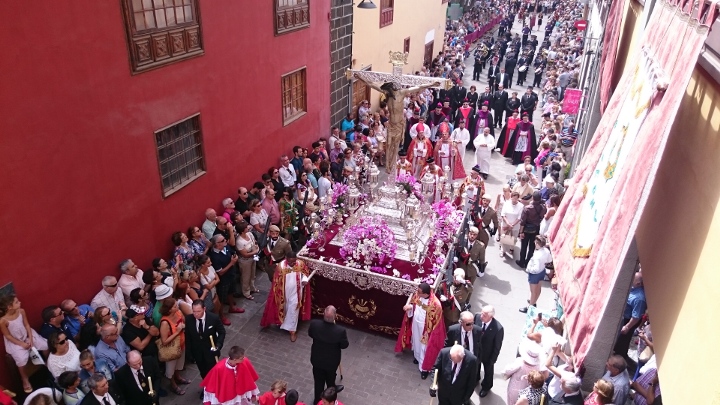
The celebrations in honor of the Christ of the La Laguna are celebrated during the month of September being the most important day the 14, declared festive in the Municipality. On day 09, the image of the Sanctuary is transferred to the Church of the Cathedral. On the 14th, around noon, Christ returns to his Shrine in procession with the assistance of a representative of S.M. The king. At night, another procession takes place, touring the convents of the Claras and Catalinas nuns. On returning to the Plaza, the most important pyrotechnical exhibition of the Municipality takes place, in the zone called El Risco, in the Mountain of San Roque, in charge of the pyrotechnics of the Province.
At the end, and coinciding with the entrance of the Holy Christ to his Sanctuary, begins the deafening «wreath» placed around the whole square. This pyrotechnic act people come from all parts of the island, collapsing the whole city by the large influx of public. Throughout the month, on the occasion of this holiday, there are different festive, cultural and sporting events.
The Franciscan Convent of San Miguel de Las Victorias houses the Royal Sanctuary that welcomes the image of the Holy Crucified Christ. A 16th-century gothic-flamenco style carved onto the island by the Adelantado Fernández De Lugo.
It was customary for the night of the eve of the great day of the feasts of Christ to leave in a luminous procession through the centric streets of the city, groups of children carrying decorated lights accompanied by musicians, who in a cheerful procession entered the square to contemplate the dance of the traditional fire horses of the city. They were, and for a few years now, cane structures in the shape of horses decorated with paper. During his dance in the square, there was a specially prepared one carrying fireworks (hence his name of fire horses) that among the noise of the people danced until these fires were consumed. This act was certainly dangerous, disappearing for this reason from the festive program in the forties of this century, as it is verified in the old programs kept in the Municipal Archive of the City.